Aryabhata Tech Park, Hubli pallavi@acs-foundation.in

Projects

Water Table and Lake Restoration

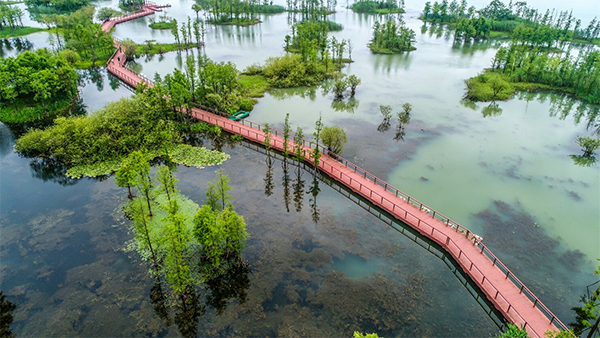
Water Table and Lake Restoration to improve water quality, enhanced storage & recharge capacity, sustainable ecosystem support and visible, long term environmental asset; Groundwater recharge across Bengaluru and Pune, Climate adaptation & resilience and Biodiversity restoration.

Smart Education Infrastructure

Interactive digital panels, Improved student engagement and Technology-enabled learning reaching Underserved government schools, multi-city impact and Long-term digital capability enhancement.


Collaboration 1: Accelerating Employability Through Future Skills

Vital Stats


Scope & Parameters
  • • Target: 1,500 Engineering & Degree students
  • • Location: North Karnataka & South Maharashtra
Intervention
Curriculum Deployment

Delivery of advanced modules covering AI/ML, Data Analytics, Electric Vehicles (EV), and IoT.

Mechanism
Experiential Learning

Implementation of intensive Industry Projects, competitive Hackathons, and dedicated Soft Skills development.

Outcome
High-Yield ROI

Dramatically improved Employability Scores, cemented Industry-Academia linkages, and direct transition into Internships and Placements.


Collaboration 2: Systemic Change via NEP-Aligned Teacher Training

The Catalyst

Training 500 Government School Teachers across North KA & South MH over 5 Years.

The Capability Upgrade

• Digital pedagogy and blended learning models.

• Capacity building in AI, Robotics, Coding, and Design Thinking.

• Assessment reform (shifting from rote memorisation to concept mastery)

• Inclusion training for highly equitable STEM access.

The Multiplier Effect

Upgraded teaching methodologies organically trickle down to directly enhance the educational quality and lifelong learning outcomes of thousands of government school students, cementing grassroots NEP 2020 implementation.


Collaboration 3: Equipping the Next Generation with NEP Competencies

Project Scope & Curriculum


  • • Target: 2,000 Government School Students.
  • • Geography: North KA & South MH.
  • • Core Curriculum: Deep immersions into AI, coding, robotics, digital literacy, and modern design thinking.

Strategic ROI & Investment

  • • Policy Alignment: Direct execution of the NEP 2020 emphasis on experiential and multidisciplinary learning.
  • • Social Outcome: Underprivileged youth gain immediate skills parity with private-school peers, becoming job-ready.

Collaboration 4: Agri-Tech & Livelihood Diversification for Marginal Farmers

Project Overview

⚙️

Objective: 100 Farmers income to be increased using technology

📍

Location: North Karnataka & South Maharashtra

🎯

Target: Marginal Farmers with land holding less than 2 acres
Key Activities

  • • Promotion of climate-resilient crops and diversified cropping systems
  • • Training on sustainable agriculture practices (natural farming, organic inputs, soil health management)
  • • Introduction of water-efficient irrigation systems (drip, micro-irrigation, rainwater harvesting)
  • • Farmer capacity building on climate adaptation and risk mitigation strategies
  • • Formation and strengthening of Farmer Producer Organizations (FPOs)
  • • Access to market linkages and direct-to-market platforms
  • • Support for value addition and agro-processing units
  • • Facilitation of crop insurance and financial literacy programs
  • • Introduction of agri-tech solutions (mobile advisory, weather alerts, precision farming tools)
  • • Livelihood diversification (dairy, poultry, horticulture, agro-forestry)

Project Outcomes and Impact

  • 💰 20-30% increase in average farmer household income through improved productivity and market access.
  • 💵 Higher price realisation via direct market linkages and strengthened FPOs.
  • 🌍 Reduced climate risk and income volatility through crop diversification and sustainable practices.
  • 💧 Lower input costs and improved soil & water efficiency, leading to long-term livelihood stability.
Summary
  • Key Outcome: Increased farmer incomes and hence their economic level
  • Challenges: Continuous engagement for very long time

Collaboration 5: Securing Year-Round Yields via Community Farm Ponds

Project Overview

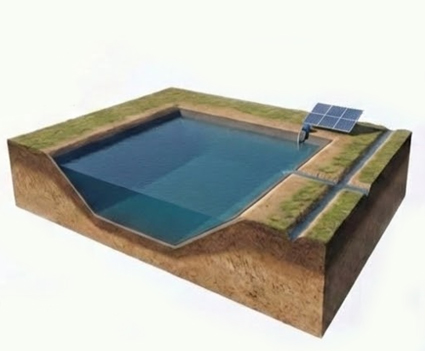
  • Objective: 10 Community Farm Ponds for Year-Round Irrigation & Groundwater Rejuvenation
  • Location: North Karnataka & South Maharashtra
  • Target: 100 odd marginal farmers

Key Activities

  • • Geo-lining (where required) to reduce seepage loss
  • • Rainwater harvesting channel alignment
  • • Installation of solar pump (select cases)
  • • Community water-use planning workshops
  • • Formation of Water User Groups for maintenance
Community Farm Pond
Project Outcomes and Impact
  • • Irrigation access extended to 2 crop cycles per year
  • • 20-30% increase in farmer income
  • • Groundwater level improvement within 1-2 seasons
  • • Reduced crop failure during summer months
  • • Decreased rural distress migration
Summary

Key Outcome: Long term climate resilience and Increased farmer incomes and hence their economic level

Challenges: Dependent on rainfall and community ownership

Collaboration 6: Macro-Level Water Security via Lake Rejuvenation

Phase 1
Phase 1:

The Target (Before)

Identifying government-owned community lakes in North KA & South MH suffering from severe siltation, structural decay, and water loss.


Phase 1
Phase 2:

Engineering Intervention

  • Desilting and deep excavation of the lake bed.
  • Structural strengthening of embankments and bunds.
  • Rebuilding robust inlet/outlet structures.
  • Creation of strategic recharge trenches.
Phase 1
Phase 3:

Impact & ROI (After)

  • 30-50% immediate increase in water storage capacity.
  • Vital agricultural support engineered for dry seasons.
Summary
  • • Key Outcome
  • • Challenges

Collaboration 7: Two Wheeler & Four Wheeler Training

Investment & Timeline:
Sector Focus: Automotive (Two & Four Wheeler)
Phase 1: The Target
(Outreach & Identification)
  • Identifying independent, unorganized roadside mechanics across targeted districts who operate outside formal educational channels.
  • Building foundational trust within local vernacular communities to overcome hesitation toward formal training.
  • Assessing baseline skill levels to group cohorts effectively for advanced technical upskilling.
Phase 2: On-Ground Intervention
(The Methodology)
  • Targeted Mobilization: Executing community-level campaigns to ensure high enrollment and attendance from the informal sector.
  • Specialized Trainer Deployment: Utilizing a vetted network of subject-matter experts capable of delivering complex modules (like BS6 and OBD II) in local dialects.
  • Adaptive Pedagogy: Implementing visual, hands-on training frameworks specifically designed for adult learners with limited formal education.
  • End-to-End Logistics: Managing all venue scouting, workshop structuring, and daily on-ground coordination.
Phase 3: Impact & Scale
(The Result)
  • Seamless transition of informal, traditional mechanics into certified technicians capable of handling modern automotive electronics.
  • Standardized data tracking for attendance, skill acquisition, and post-training integration.
  • Proven Scale: Demonstrated capacity to successfully mobilize and train 3,200+ mechanics across Karnataka in a single programmatic year.

Healthcare

  • • Mobile Medical Units (MMUs) for rural & tribal outreach
  • • Cancer screening & early detection programs (breast, cervical, oral)
  • • Maternal & child health initiatives (nutrition, antenatal care, anemia reduction)
  • • Dialysis centers in government hospitals (PPP model)
  • • Primary Health Centre (PHC) infrastructure upgrade
  • • Telemedicine & digital health platforms for remote diagnostics
  • • Mental health awareness & counseling programs
  • • Preventive health camps (diabetes, hypertension screening)
  • • School health & adolescent health programs
  • • Medical equipment donation (ICU beds, ventilators, diagnostics)